Developmental by Design
A Certificate in AI and Human Development
Course Description
Developmental by Design is a 12-week online certificate program from the Harvard Graduate School of Education for the people who build, choose, and govern AI in learning.
Tool literacy shows people how to use AI. This certificate builds foundational judgment: the ability to look at a specific system, a specific learner, and a specific point in that learner’s development, and decide whether it grows a capacity or substitutes for the work that would have built it.
That judgment is grounded in the science of how people learn and develop, and it is built through practice. Learners exercise it every week on a real AI product, policy, or process, then prove it in a capstone they design and present. Graduates leave able to make the call before AI reaches a learner, and to make the case in rooms that don’t always share the vocabulary.
Course Details
- Length
- 12 weeks, 5 to 7 hours a week
- Fees
- $1,900
The course combines self-paced online coursework (video, readings, and a weekly technology evaluation) with optional weekly one-hour office hours led by program faculty. The course concludes with a live Celebration of Learning, where participants present their capstones.
Course Schedule
The program runs in three stages. Everyone shares the first and last stages. In the middle stage, each learner reads the developmental domains through the age band they work with: Early Childhood, Grades K-5, Grades 6–12, Higher Ed, and Workforce.
Build a shared understanding of what AI is and why it matters for human development, map where it shows up across a learner’s life, and start to scope your capstone around a product, a policy, or a process.
Work through core domains of human development, and evaluate a real AI product, policy, or process through each lens.
Turn that analysis into design by building and critiquing a prototype through rapid feedback, then present your capstone.
Learning Objectives
Judge fit. Judge whether a given system belongs in a given learning environment, and act on that judgment.
Appraise evidence. Appraise claims and evidence about AI and learning, including when the evidence does not yet exist.
Design. Design AI-enabled learning experiences in which developmental consequences shape what gets built.
Make the case. Make the developmental case to people who do not share the vocabulary, and shift what gets decided.
Developmental by Design Framework
Developmental by Design means building things that help the people who use them grow. Whether something helps a person grow is rarely a yes-or-no question. Developmental by Design is a way of building products, processes, practices, and policies that asks the right ones instead: What capacity does it build? For which person? At what point in their development? Set up how? In what setting? And in place of what?
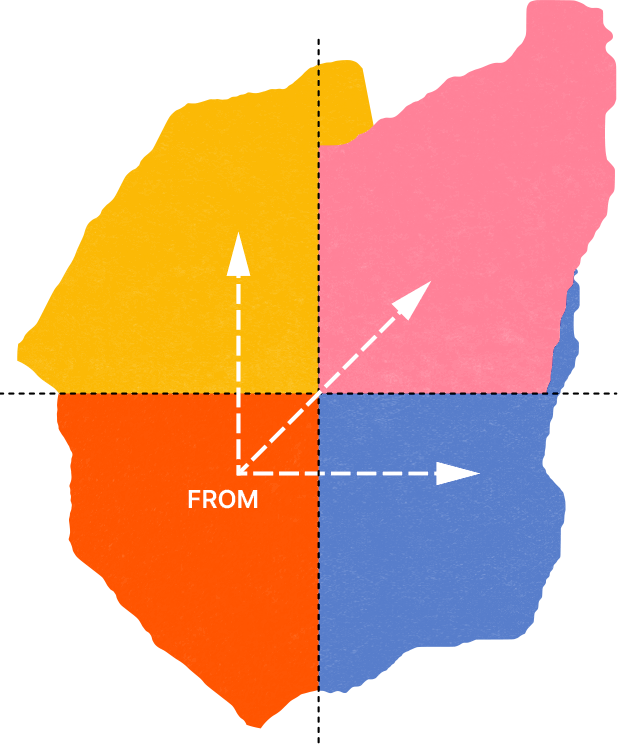
In general, we believe something is better for human development when it gives people opportunities to practice what they are developing and moves them toward other people, rather than taking their place. Those two things are the axes of this map.
The map is a quick, visual way to see the change a design makes, rather than the design on its own, by putting where someone is today next to where they would be with it. The top right is the development zone, and any intentional movement toward it is developmental by design.
Our Practices
We think six practices belong in the toolkit of anyone deciding how AI shows up in people’s development. A practice is something you get better at rather than something you finish, and something that you return to as you need it. Practices are personal to you and your context. You can do a little bit or a lot, in a way that is authentic to you. It is about getting better, not doing it perfectly.
Design in Particulars: Every claim about a design depends on a situation, and this practice is about naming that situation before you start. Questions like “for what, for whom, when, how, in what context, and in place of what” are worth asking, because each can change whether a design supports someone’s development.
Protect the Struggle: Every capacity a person is building has a hard part where the growing actually happens, and this practice is about finding it and deciding how much of it to leave with them.
See What AI Makes Possible: Imagination needs something specific to work from, and this practice breaks AI into the separate things it offers, then uses each one to imagine widely. It answers instantly, produces endless variations, never runs out of patience, holds a role, argues a side, and finds patterns across more work than a person could read.
Design Toward Relationships: Much of what people develop comes from other people, partly because someone can misread you, refuse you, and notice what you are ready for next. This practice is about building so the work keeps sending people to each other.
Look Without the Tool: Every task already has a way it happens, and every domain already has a way people get good at it; this practice is about looking at both before you add anything.
Notice What Isn’t There: What a design does in one place shows up somewhere else later, often for someone you weren’t designing for. This practice is about following it down the chain.
Our first cohort (Jan 19 – April 9, 2027) is full. Join the waitlist to be considered if a seat opens, and to get priority access when we announce additional 2027 cohorts.